September 2015 — Banský Studenec
Venue: Banský Studenec
From the retreatPhotosChronicle
Talks of the series
What the series says (short overview) — About these overviews
Across these four talks from the sesshin in Banský Studenec, Mike points to a natural, balanced and ordinary state rather than to anything spiritual or special, and says that we do not get it from somewhere else but return to it, or uncover it, where we are. He regrets that Zen has a reputation for spirituality, says that after 25 or 30 years in Japan he can say with confidence that Japan is not a spiritual country, and describes zazen as a very simple practice in which we take the right posture and wait to return to our natural state. In the same spirit he says that sacred is ordinary and ordinary is sacred, that he personally does not like it when we make things too sacred, and that the dojo and the home are both important, both ordinary and both sacred.
He explains that the small muscles that control our posture are governed by the autonomic nervous system, so we cannot relax them consciously, but if we take the right posture we can allow the relaxation to happen, which is why zazen is to have no intention, since trying to get rid of stress or thinking only makes us tenser. He compares zazen to sport, in which we move to return to normal, and recalls that his teacher Nishijima said many times in his later years that Buddhism is just balance of the autonomic nervous system. The Buddha's state without thinking and feeling is, Mike says, the state we have when we are acting, as in the instant of reaching for a cup, so it is not something wonderful to get, and even Kodo Sawaki said, you can't get anything. In the last talk he adds that Sawaki said this because people in Japan had come to believe that Buddhism can give a special state, such as nirvana, satori or enlightenment, and that zazen is not getting knowledge, wisdom or balance but uncovering your own balance: there is something, but we can't get it if we look for it, because it is there when we stop trying. Mike presents the will to the truth as the first of Nishijima's four main points of the Buddhist path, a desire that all human beings share and that adults pursue in music, sport, business or food, but in Buddhism, he says, we search for the truth in an unusual direction: right here. Buddhist philosophy does not contain the truth but points to it, he says, and instead of a finger pointing at the moon he would call it a finger pointing at the ground; the truth does not belong to Buddhists, so when we gather in a group, wear special clothes and chant the Hannya Shingyo, we must not believe that we have it and nobody else does.
The second point, cause and effect, is for him the same rule as in science, so everything we do has an effect even when we can't see it, and he finds this comforting because in Buddhism we can make an effort without worrying about the result. The third point, instantaneousness, means that now is the only reality, so we can be free from our past and from our future, yet at the same time we are bound by cause and effect, and Mike himself calls this freedom and lack of freedom a contradiction. On the fourth point, the practice, Mike says that Dogen said that if we practise balance our actions are balanced, which means doing the best we can, and says himself that we can be free if we practise balance, not only zazen but other balance too, although zazen was very precious to Nishijima, who taught it his whole life and was proud that sport and zazen had some connection. Mike's own picture of our psychological state is a semi-permeable membrane, which lets pressure pass through and so does not need to move, and the aim of the Buddhist state, he says, is that we become a semi-permeable membrane, very flexible and able to receive and give, like the flexible mind that Dogen said he got in China. Becoming balanced like a semi-permeable membrane takes, he says, between ten and twenty years, for him more than twenty, and to the idea that practice changes our character he answers that he did not change his character but his character changed. The membrane returns in the last talk, where he says that in many Buddhist groups everything is sacred, so that we must hold incense, wear a robe and bow in a certain way, but that even in the second century Nagarjuna said very strongly that this place and this place are the same, and so we have to have a semi-permeable membrane. Because we cannot see the result of our effort in zazen, which seems to do nothing except take our time and sometimes be painful, there is, Mike says, some kind of belief or trust, which he thinks is a different kind of belief to religion, although it might be similar. When Robert objects that in Buddhism we should know and not just believe, Mike asks how we can know the future. Mike offers some of this as his own picture or feeling: the membrane is his own thinking, he finds the Hannya Shingyo too sacred for himself, which may be his own problem, and he ends the last talk by saying that he is really explaining these things to himself.
Talks in this series
Zen Without Spirituality
Mike: zazen is a very simple practice; after taking the right posture the body returns to balance by itself
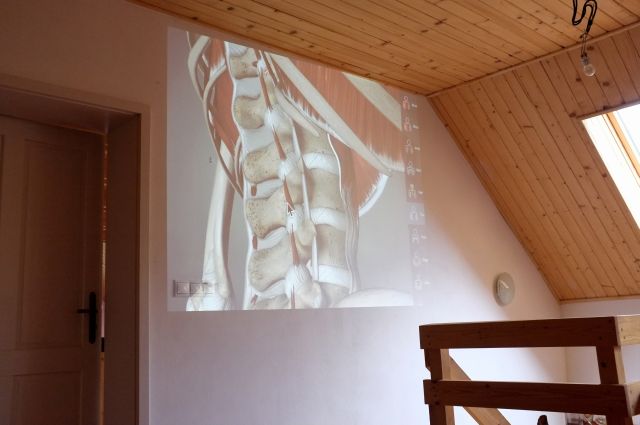
Mike says that zazen is a very simple practice in which we take the right posture, wait, and let the body return to its natural state of balance, and he regrets that Zen has a reputation for spirituality. He explains that when European and American people look at Japanese Zen they are looking for something missing in their own, the spirituality of Christianity, which used to be very strong and is now becoming weaker, whereas after 25 or 30 years in Japan he can say with confidence that Japan is not a spiritual country, while Europe is a spiritual place. His teacher Nishijima, who lived to be 94, said many times in his later years that Buddhism is just balance of the autonomic nervous system, and Mike shows a paper whose authors conclude that posture has a striking, significant influence on breathing, hormones, spinal pain, headaches, mood, blood pressure, pulse and lung capacity, although most doctors do not check people's posture.
Nishijima’s Four Main Points
Will to the truth, cause and effect, instantaneousness, zazen: Mike on Nishijima’s central points of the path
Mike presents what he calls Nishijima Roshi's four main beliefs, the central points of the Buddhist path: will to the truth, cause and effect, instantaneousness, or the present moment, and zazen. The first, will to the truth, is the search for the truth that human beings share, and in Buddhism, Mike says, we search for it in an unusual direction: right here.
Buddhist State as Semi-Permeable Membrane
Mike: a flexible mind that receives and gives; zazen can bring it, but it took him more than twenty years
Mike uses the picture of a semi-permeable membrane to describe the Buddhist state: a membrane expands when the pressure inside is higher than outside and contracts when it is lower, but a semi-permeable membrane lets the pressure pass through, so it does not need to move. He says that with “I am important” pressure builds up inside and our body becomes bigger, while with “I am not important” it shrinks, and that the aim of the Buddhist state is that we become a semi-permeable membrane, and then we are very flexible. He tells how Dogen, asked by the monks what he had got in China, answered that he got flexible mind, which Mike describes as the situation where we can accept and give, receive and give flexibly.
Dojo and Home, Sacred and Ordinary
Mike: zazen is not getting knowledge, wisdom or balance but uncovering your own balance
Mike says that sacred is ordinary and ordinary is sacred, and that he personally does not like it when we make things too sacred. He describes how in many Buddhist groups everything is sacred, so we hold incense, wear a robe, bow and creep around in the sacred area, then go out and later go back in. Even in the second century, he says, Nagarjuna said very strongly that this place and this place are the same, and Mike concludes that we have to have a semi-permeable membrane.