Buddhism Through European Glasses
Mike: it seems that Greek and Christian perfect worlds shaped the West, so right in action is hard to see
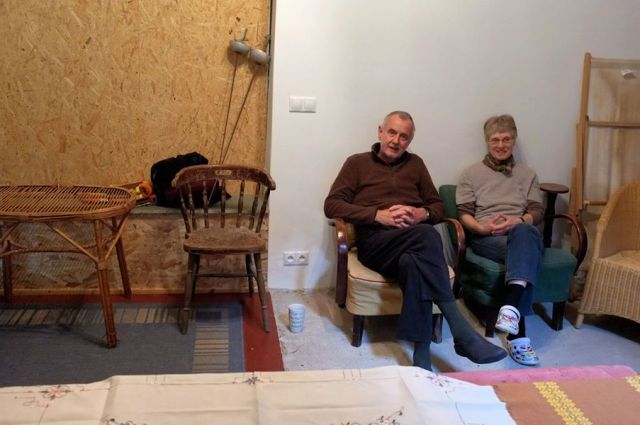
Michael Eido Luetchford
August 2014 — Banský Studenec, Talk 2.
Venue: Banský Studenec.
Michael Eido Luetchford · August 2014 — Banský Studenec, Talk 2
Source: video transcript.
From the retreatPhotosChronicle
Video

Video chapters
Video: Tomáš David- 0:00 Right is in action, not in the abstract
- 1:03 Why this is strange to Western civilisation
- 6:22 This way of thinking did not exist in the East
- 10:05 Mike in Japan in 1977
- 14:54 Europe's task: understanding Buddhism
- 17:18 European glasses
- 20:32 Ten years of learning with a master
- 24:34 Being yourself: zazen and a teacher
- 26:05 Question: learning through the body
- 30:05 Question: spirituality and Japan
What the talk says (short overview) — About these overviews
Mike says that Dogen teaches that right is in our action: it does not exist somewhere in the abstract, waiting to be done, and this point of view is quite strange to Western civilisation. The problem we face in understanding Buddhism, he says, is that we are all wearing European glasses and so interpret Buddhism through them. It is difficult to take the glasses off, but he hopes it becomes easier as the world becomes more integrated and we learn more about other cultures.
He explains why the point of view is strange: it seems that some Greek philosophers developed the idea of a perfect, abstract world of forms, and around the same time Christianity developed the belief in a perfect world called heaven, which we can reach after we die by making an effort to be good. When the two met, both became stronger and the basic view of Western civilisation was formed, and he says that this way of thinking, that everything should be good and bad should be eliminated, still exists deep in all of us in Europe, even if we study Buddhism or say we do not believe in religion, whereas it did not exist in the Eastern countries. When Mike went to live in Japan in 1977, he was horrified that the Japanese instructors he worked with did not want to plan where they were going, but after nearly ten years he started to accept their way of making a little plan, doing something, changing the plan and doing again. He found this very practical and realistic in many situations, while his own wish to have a complete idea of what he was doing before he started did not work, so he noticed a very deep difference between his culture and the Japanese culture. He thinks this difference allowed countries in the Far East to accept and practise Buddhism, a very pragmatic way of living unhindered by the strong principles and beliefs of European civilisation, though he does not mean that the Eastern civilisations were superior.
He says they must have found it easier to accept the fundamental teaching of Buddhism that it is what we do that is important, although we think and plan, and that it is our action that determines the future. In Europe, he says, we have a task, to understand Buddhist teachings as they were meant, but the task is very difficult. Teachers have come from Japan to teach Buddhism here, yet it was very easy for young people studying with Deshimaru to misunderstand, and he says there are similar examples because our culture has no viewpoint that values action more than thinking. It took Mike many years, and Gabriele the same, to take off their glasses while studying with their teacher Nishijima Roshi, and he asks us not to underestimate what Buddhist teaching has at its centre, even though it may not seem to agree with what our society and culture feel is true. He speaks of remaining open to learning instead of comparing what we hear with our own belief, and notes that in Japan someone who wants to become a potter or make wooden bowls studies with a master for maybe ten years, whereas people told to study Buddhism for ten years are horrified and say they can learn it quickly from books. He says society is forgetting the traditional way of learning deep truth with body and mind, and that the pots of well-known potters whose work is valued are themselves; the aim of Buddhism, he says, is the same: to make ourselves, to be ourselves, to just express ourselves. He names two steps, to start to practise zazen and to find a teacher who knows what it is like without any glasses on, adding that Dogen said that if we cannot find a teacher who does not wear glasses, it is better not to have any teacher. Asked how to learn Buddhism through the body, he says to sit in a balanced state, with the weight of the head balanced on the shoulders and the weight of the body over the pelvis, and to train the body until this becomes normal. He adds that although the physiological explanation he cites, about balancing the two parts of the autonomic nervous system, is based on medical fact, no research has directly linked zazen, posture and those physiological facts.
Complete English transcript — About transcripts
Editorial note: This transcript of a spoken talk has been lightly edited to read well as written text, keeping the speaker’s voice and meaning; the wording was adjusted with great care. We recommend watching the original video recording too.
Difference between thinking and acting. And how Dogen teaches that right is in our action. Right does not exist somewhere in the abstract, waiting to be done. And that point of view is quite strange to Western civilisation. Why is that? It seems that as far back as we can see, in Greek times, some philosophers developed the idea that there is a perfect, abstract world of forms, existing somewhere. And then in this world, we see imperfect versions. So everything that we experience has a perfect version in this world of perfect forms. And this kind of thinking was quite strong in Greek philosophy.
And around the same time, the belief in Christianity developed, as a belief in a perfect world called heaven, where everything was good and perfect, and the belief that human beings could make an effort to be good and then go to live in this perfect world. So those two ways of thinking are very similar. And when Christianity met together with the Greek ideals, both became stronger. And the basic view of Western civilisation was formed
at that time. A perfect world existing somewhere that we can access after we die. And our journey through life is to make an effort to be good, to get rid of bad, into another world full of bad. And therefore we would become completely good and be able to live in the perfect world. This way of thinking still exists in all of us today in Europe.
Even if we study Buddhism, or we say that we don't believe in religion, deep in our culture we have a point of view that everything should be good and bad should be eliminated, that our life should aim to become better and better, slowly getting rid of all the bad things in the world. And each of us has that feeling now, somewhere deep inside us. But that way of thinking didn't exist in the Eastern countries. Of course, there is a tendency in human beings towards that point of view.
So even primitive societies had gods who were all-powerful. But generally speaking, those gods were used to explain how the world works, especially how the forces of nature work. So the idealistic Christian point of view that came from Christianity and Greek idealism was really limited to a particular area in the world. Places like China, Japan, Korea, Burma, Tibet, and other places that didn't develop into complete civilisations so quickly, didn't have this way of thinking. So for that reason, the kind of viewpoint that Dogen teaches, which he said is not his idea,
but the teachings of Buddhism, that viewpoint, that way of life, could flourish in China, Tibet, Burma, and other countries, Japan, Korea. Not to say people didn't think. But even today, if you go to Japan, for instance, you will find that the emphasis between thought and idea and practical action is different than it is in the Western civilisation. I met this situation very quickly when I went to live in Japan in 1977. I was instructing engineers about microwave communication systems. And I had to work with Japanese instructors.
And I was horrified that they didn't want to plan where they were going and where they were going to get to. And I'd actually thought, these stupid people. I fought against their simple practical way. But after being in Japan for nearly ten years, I started to accept their way of doing things, which is to make a little plan, and then do something, and change the plan, and do something. Then make another little plan and do again.
In many situations it was very practical and realistic. But my way of wanting to make a complete idea of what I was doing before I started didn't work. So I noticed there is a very deep difference between my culture and the Japanese culture. And I think this difference allowed countries in the Far East to accept and practise Buddhism, which is basically a very pragmatic way of living, unhindered by the strong principles and beliefs of European civilisation.
At the same time, we can see now that societies who have no principles and belief cannot find a clear direction in modern life. So I don't mean to say that the Eastern civilisations were superior. But they must have found it easier to accept the fundamental teaching of Buddhism, that it's what we do that's important, although we think and plan. It's our action that determines the future. So in Europe, we have a task, to understand Buddhist teachings as they were meant. But actually, the task is very difficult.
And some teachers have come from Japan and other places to try to teach Buddhism here. In my tradition, people like Deshimaru. But it was very easy for young people studying with Deshimaru to misunderstand. And there are other examples similar to that, because we don't have any viewpoint in our culture that values action more than thinking. But maybe one is emerging now, called sports psychology. So sports psychology is very interested in action. See, what the sports person actually does is most important.
So I just want to point out the problem that we face in understanding Buddhism, because we are all wearing European glasses. So when we try to interpret Buddhism, we do it through European glasses. It's difficult to take the glasses off. It's a natural situation. But as the world becomes more integrated and we learn more about other cultures, it becomes easier. Hopefully. So it took me many years, and Gabriele the same, to take off our glasses, studying with our teacher Nishijima Roshi.
In the early days I often thought he's crazy. This man, what this man is saying is something very strange. It's not right. But in the end, he brainwashed me.
Participant: It's true. You are so powerful.
Mike: So please don't underestimate what Buddhist teaching has at its centre. It may not seem to agree with what we feel is true. True from our society, true from our culture. But if we can remain open to learning, instead of comparing what we hear with our own belief. In the old days in Europe, if you wanted to become a carpenter, you studied with your master for maybe ten years.
Still in Japan, if you want to become a potter or to make beautiful wooden bowls, you study with your master for maybe ten years. If we say to people, you have to study Buddhism for ten years, they are horrified. Too long. I can learn it all very quickly by reading books. I'm already a yoga teacher. I went on a three-month course. So this is our culture. Ten years. Oh no, I don't have ten years. So we're forgetting, society is forgetting the traditional way of learning. So to learn deep, deep truth with body and mind,
whether it's in making wooden bowls or making pots. It takes a long time to find yourself. And as many of you know, my partner is a potter, and I've been very interested to watch the world of potters. And you can learn to make pots in
Participant: six months. But to learn how to make yourself as a pot takes ten years, twenty years. And all the potters who are
Mike: well known and whose work is valued, their pots are themselves. And the aim of Buddhism is the same: to make ourselves, to be ourselves, to just express ourselves.
Participant: [inaudible]
Mike: Two steps. One is to start to practise zazen. We call it zazen, dhyāna, zen, chan, or sitting, simply sitting. And the other is to find a teacher who knows what it's like without any glasses on. Dogen said, if we can't find a teacher who doesn't wear glasses, it's better not to have any teacher.
Participant: And my second question would be, you've mentioned learning Buddhism with mind and body. I'm interested in the body part of the question, or the idea. How could you be more specific about how to learn Buddhism via your body?
Mike: Yes, sit in the balanced state. So not leaning backwards or forwards, with the weight of your head balanced on your shoulders and the weight of your body balanced over your pelvis, and train your body to make that a normal situation. We, including me, sit like this, and this becomes normal. So to sit like this we feel, Ah, I want to cross my legs. It doesn't feel normal. Ah, you know, or like this. And our muscles, all our muscles, learn this shape. And then when we sit in zazen or sit up straight, Oh no, no, no, this is better.
And so to train our body, our muscles and our
Participant: frame to feel that is normal. Well, our teacher used to explain that based on a medical side, or physiological side, it is better. That
Mike: we have two parts to our nervous system. The autonomic nervous system controls our organs and our responses unconsciously. And there are two opposing parts to the autonomic nervous system. One part stimulates us, makes our heart beat faster and our eyes focus sharply and so on, and the other part makes us relax and slow down. So, the active part and the passive part. And these are controlled by nerves coming through the spine, through the bones in the spine.
So to sit with no tension, no unequal tension in the muscles round our spine, has an effect on our nervous system, so that the nerves which are controlling the passive responses of our organs and the nerves which control the active responses of our organs are balanced. And then we are balanced. So that was his physiological explanation. And although it's based on medical fact, there is an autonomic nervous system. And it does have two parts, and a balance between those two parts is important from a physiological point of view. But there hasn't been any research directly linking zazen, posture, and those physiological facts.
Yes,
Participant: But our society is balanced towards spiritual. So I met several young people who came to our group who wanted to go to Japan, to a temple, because they imagined this very spiritual place, in a sense like this, and
Mike: black robes and very long, beautiful, shiny floors, something spiritual. But actually, Japan is less spiritual than Europe. So we imagine that Buddhism is spiritual because we are spiritual, and we lost our spiritual side in modern times with science, so we look for it somewhere else. So maybe it's in Japan, maybe it's in China, maybe it's in Korea. I lost it. I want to find it again. Well, I don't know. I did like a little bit of that when I met Nishijima Roshi in Japan.
Participant: Of course, you find somebody and you think they're perfect, and you want to be like them, and you try to be like them, and you copy them. But sometimes you have to realise that it's a dream. So the point is to realise that person is just a human being.
Mike: They're not telling me to be like them. Spending twenty years translating the Shobogenzo single-mindedly is a very, very difficult, severe life. So I look at Gabriele and I feel, wow, that's quite something. But I can't be like her. I have to be like me.
Participant: And I had to be like me.
Mike: Yes.
Participant: It wasn't so severe as you imagine.
Mike: Yes, it was.
(laughter)
Mike: Hilarious.
Participant: You know, you can never be another person, and we can never really understand. But I think that's wonderful in this life, that it is like that also.
Mike: Or my foot is on the floor, so the floor must be here, at the same time as my foot. A chair underneath me, and the floor, and you're sitting on the floor, and I'm making a vibration in your ears. So that's interdependent. I'm here and you're here.