Zazen – How to Do It
This page is also available in Slovak.
Introduction: the text below is a translation of the article How to Do Zazen by Brad Warner. I chose it because it is short, clear & well written.
Parts of the text in italics are quotations from Fukan zazengi by Master Dogen. Individual images can be enlarged by clicking on them.
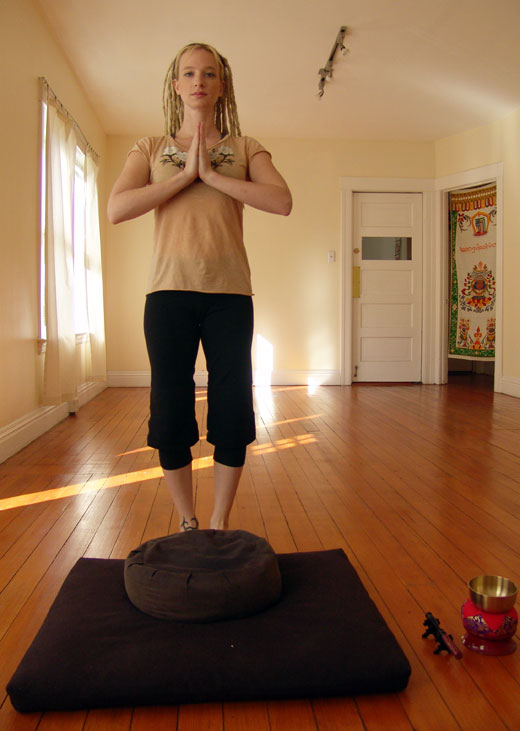 For [za]zen practice, a quiet room is usually best. Eat and drink in moderation. Set aside all that presently entangles you. Let the myriad things rest for a while. Do not think about what is good and what is bad. Stop the driving movement of mind and consciousness. End intellectual consideration through images and thoughts. Do not try to become a Buddha.
After all, how could that concern sitting or standing?
At the place where you are going to sit, place a thick mat and put a round cushion (zafu) on it.
Approach the cushion and put your hands together in gassho.
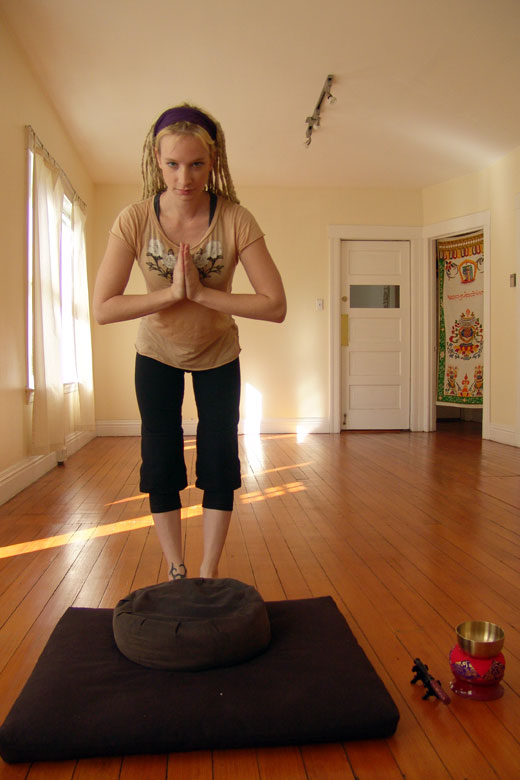 Bow toward the cushion.
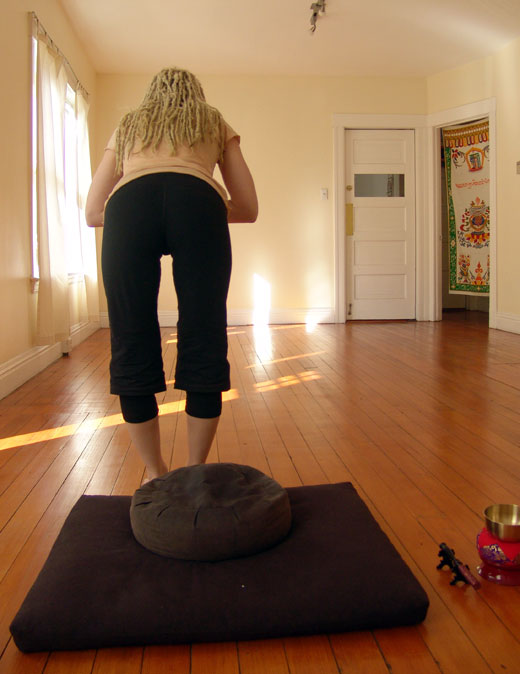 Turn right (clockwise) and bow in the opposite direction.
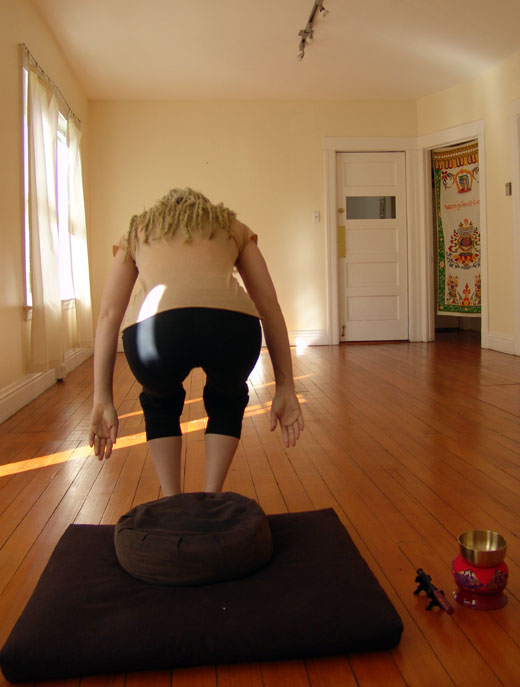 Sit on the cushion.
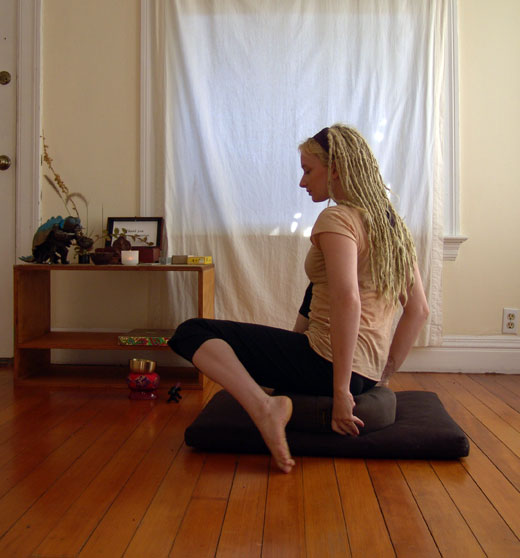 Turn right (clockwise) until you are facing the wall.
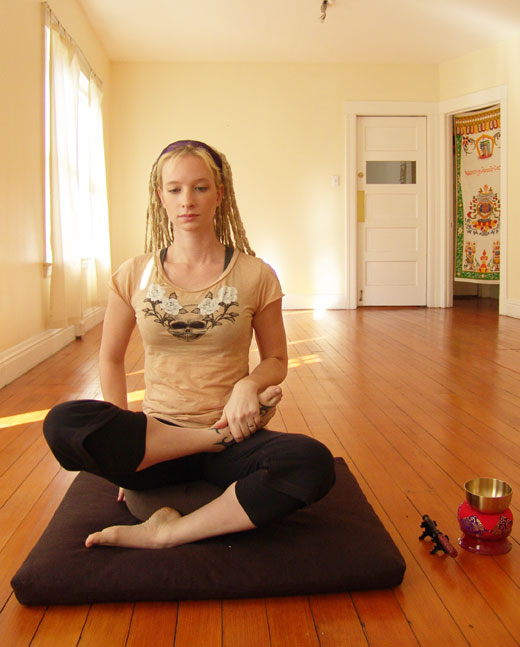 Sit either in the full-lotus or half-lotus posture.
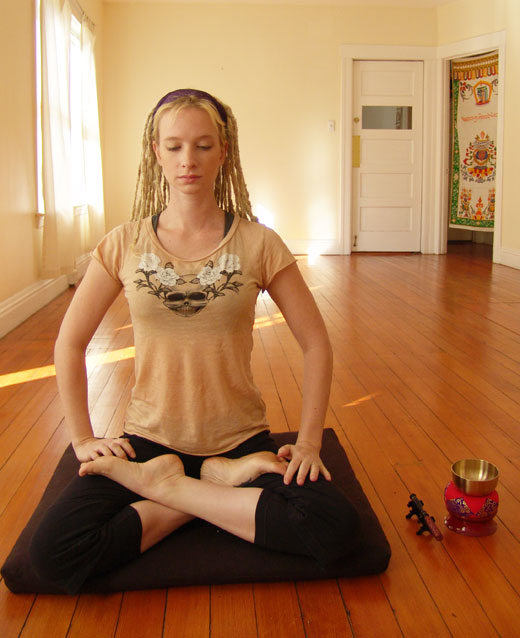 If you want to sit in the full-lotus position, first place your right foot on your left thigh and then your left foot on your right thigh. If you want to sit in the half-lotus position, place only your left foot on your right thigh.
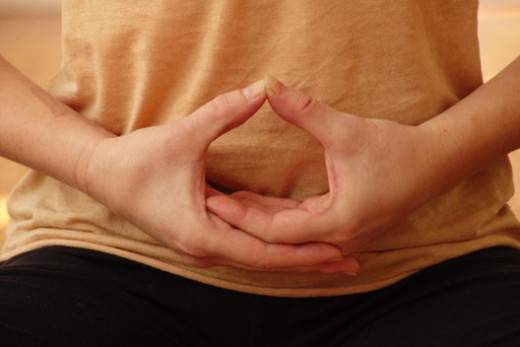 Then place your right hand over your left foot and your left hand on your right palm. Your thumbs meet and support one another.
 Many practitioners find it helpful to lean first to the left and then to the right, making it easier to find a balanced position for the spine.
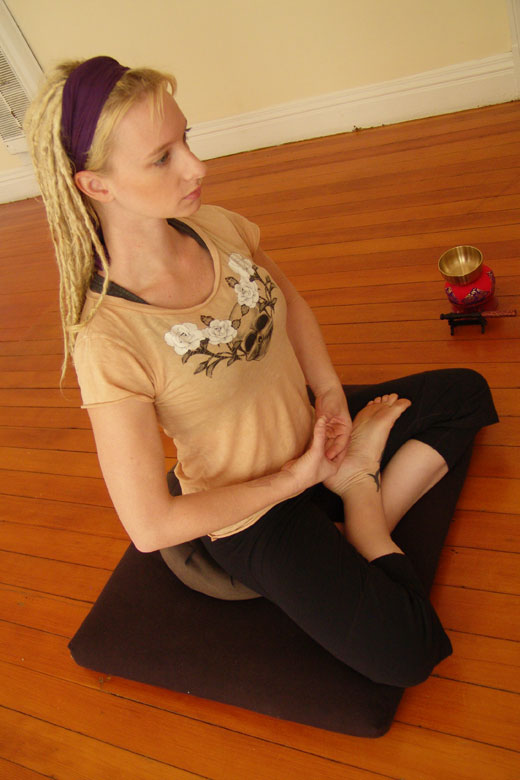 Simply sit upright. Do not lean left or right, forward or backward. Make sure that your ears are level with your shoulders and your nose is level with your navel. Rest your tongue against your palate. Keep your mouth closed. Your eyes should be open. Breathe freely through your nose.
After assuming the correct position, exhale completely once and sway left and right. When you sit in a state as still as a mountain, think not-thinking.
How is it possible to think not-thinking? It is a state different from thinking. This is the key point of zazen.
The beginning of zazen is announced by the sound of the bell repeated three times.
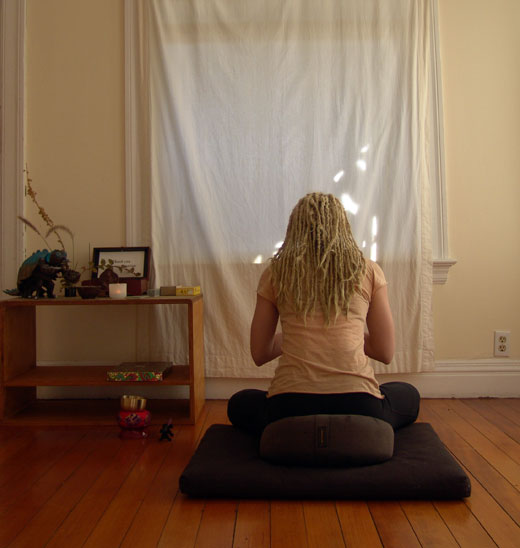 At the end of zazen, the bell sounds once. Bow toward the wall.
When you rise from the position, do not make sudden movements. There is no need to hurry or force yourself.
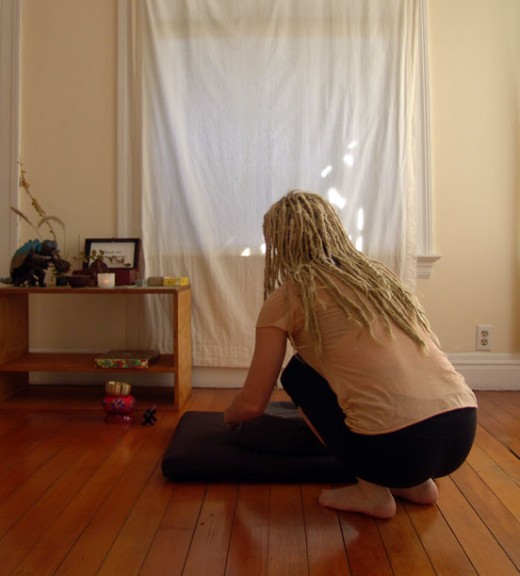 Fluff your cushion.
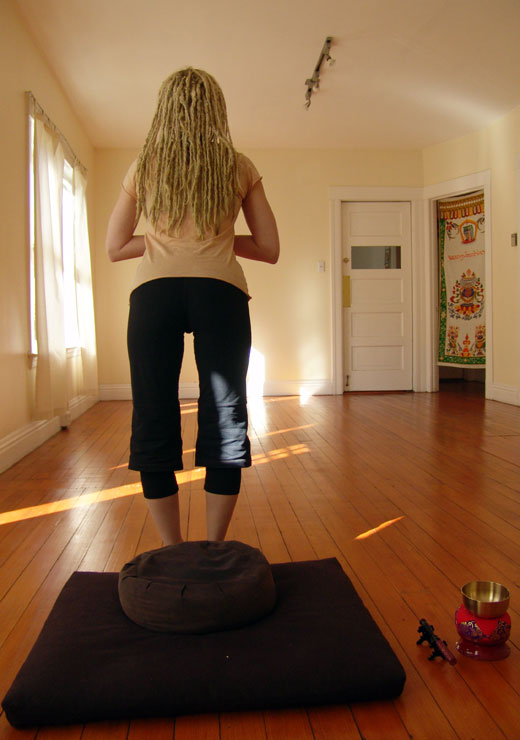 Stand up. Bow again toward the cushion and away from it (always turn clockwise).
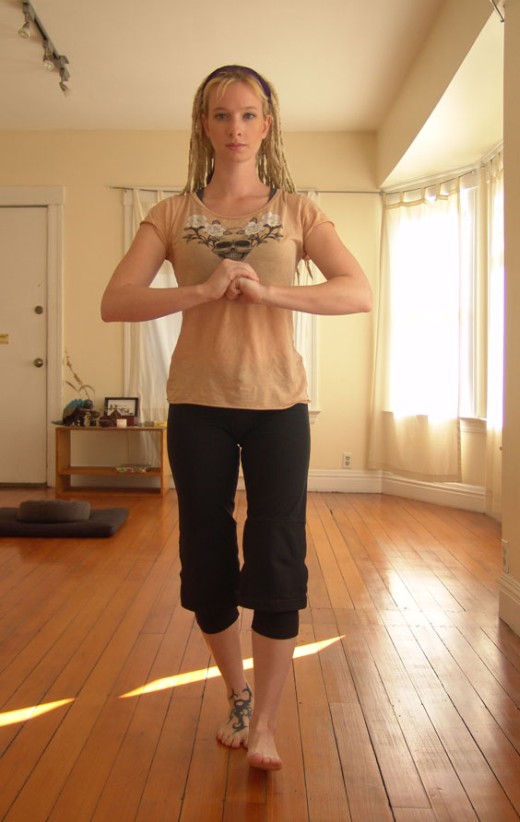 If kinhin (walking zazen) follows, turn left and begin to walk slowly.
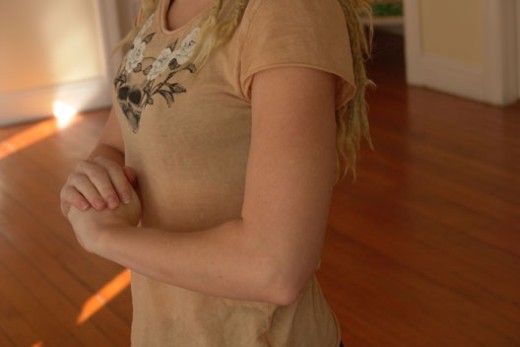 Arrange your hands as shown. Make a fist with your left hand, with the thumb inside, and place your right hand over it. Position your shoulders so that your hands meet at the solar plexus.
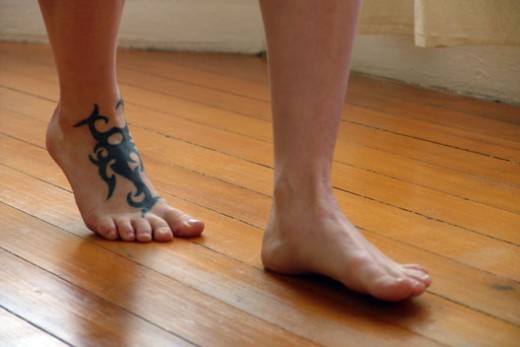 Walk at roughly one step per breath. When the bell announcing the end of kinhin sounds, walk at a normal pace back to your cushion. Always walk only forward. Even if you have passed your cushion by a little, you need to walk around the whole zendo and back.
Bow again toward the cushion and away from it. If another sitting period follows, begin again. If the practice ends with kinhin, wait by your cushion and bow together with the others in the room.
Thanks to Liza Rose for demonstrating the posture and to Svetlana Dekic for the photographs!
Slovak translation published with the author’s permission.
- Liza Rose’s pages about yoga and on Suicide Girls
- Brad Warner’s Hardcore Zen blog
- Fukan zazengi – Universal Instructions for the Practice of Zazen by Master Dogen (Czech translation)
- Introduction to Buddhism and the Practice of Zazen by Michael Luetchford (Czech translation)